
Knowing the Game
By Gareth Greensill
Knowing your distance
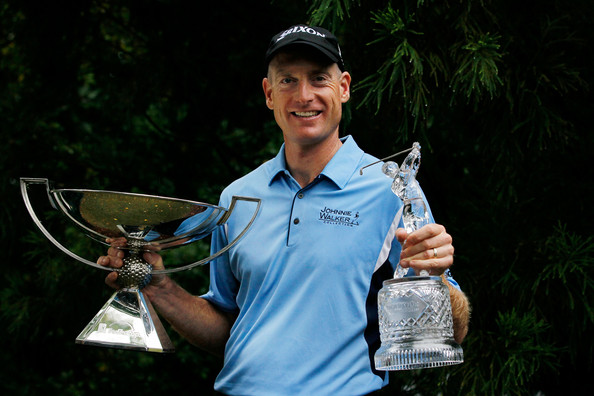
When it comes to golf there is advice available around every corner. How to swing, how not to swing, what equipment to purchase, how to warm up! The list of do’s and don’ts is endless, and can at times be overwhelming to us weekend warriors. Whilst everyone strives for the perfect swing, and at times just any swing, our fixation with getting the mechanics right often mean we fail to identify other areas of the game that will help us improve our scoring and reach our ultimate goal of dethroning Bernie “never wet” Bernberg from the summit of the SOS leaderboard come the final standings! A perfect case in point is Jim Furyk with his unorthodox swing.

One piece of advice that has helped me tremendously when I still used to know what a golf course looked like, was knowing the distance I hit my clubs. And not just knowing the approximate distance I hit my clubs but knowing the exact distance I hit each club and every club in specific conditions. It’s an easy concept that social golfers often take for granted. How often have you heard the saying “I hit my 7 iron 150 metres”. Is it exactly 150 metres or is it 148 or perhaps 152? Whilst a metre of two either way may seem irrelevant, it often means the difference between a makeable birdie putt and fishing your ball out the pond in front of the green. Do you ever wonder why people play so much better at their home course? It’s not that they’re better golfers there, but the fact that they’ve probably played the course so many times and from so many different situations that they know exactly what club to hit from any position. Knowing the perfect club for any situation and from any distance means good shots turn out good (as opposed to the all too familiar feeling of hitting a great shot only to see it airmail the green or land in the front bunker because we used the wrong club) and bad shots are not compounded by leaving yourself an impossible recovery.

With our year end tour fast approaching, and for many of us the challenge of playing in unusual conditions down at the coast, there are a few concepts related to distance and club selection that are discussed below that may be useful in helping a few of us lower your scores. For the boys hoping to be in the running for major honours, knowing your distance may be a key advantage under the nail biting, nerve jangling pressures of the SOS tour finals to taking home the coveted SOS Tour Championship or better yet 2015 SOS Tour winner!
Understand the wind
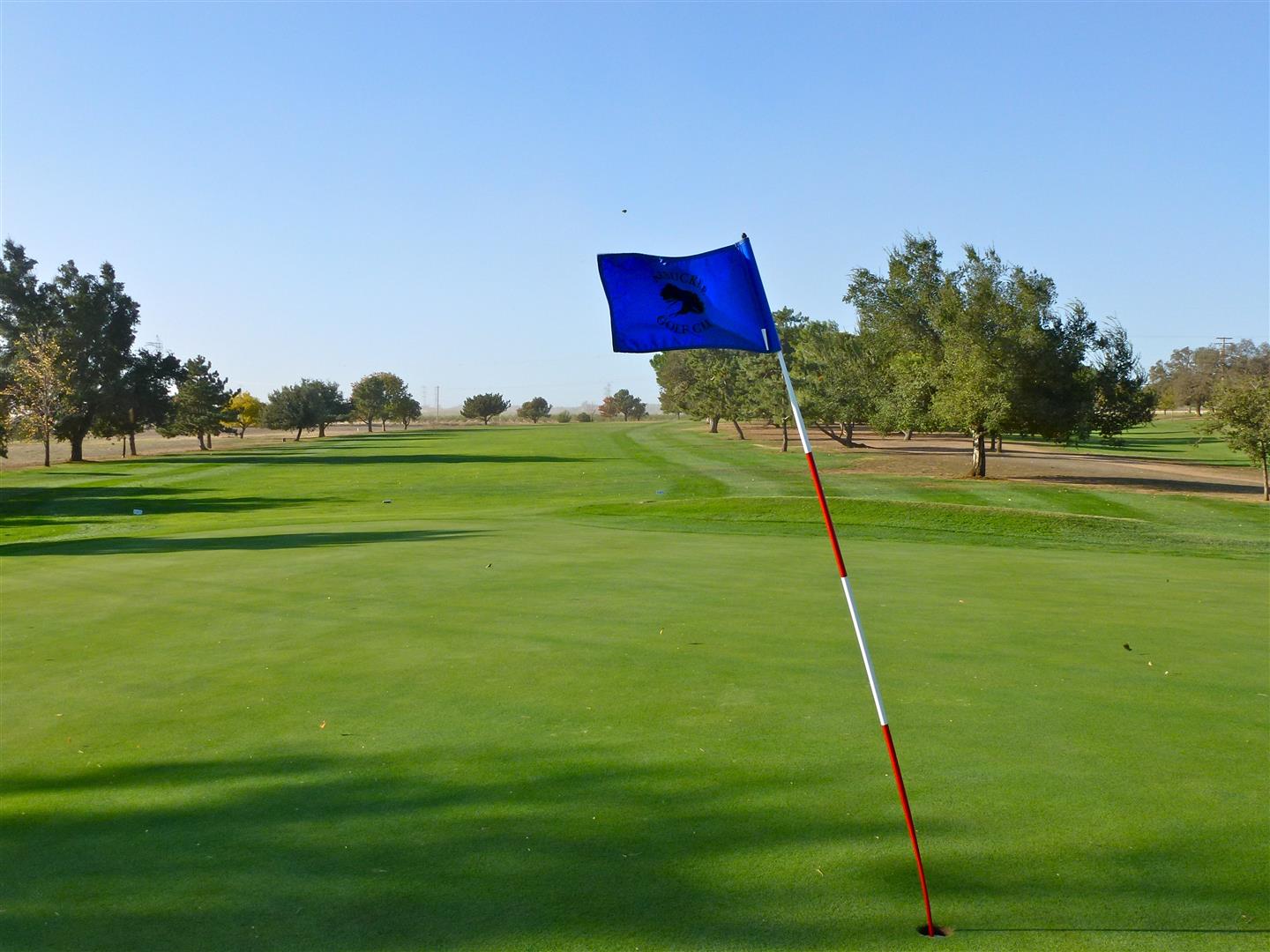
The first concept is wind direction and speed. This is particularly important down at the coast where playing a round in what feels like a hurricane is not unheard of! Even the slightest of breezes can have a drastic effect on the flight of your ball. A simple rule of thumb is to take one extra club for every 10 km of wind in your face (take one less club for every 10 km of wind at your back). It’s also important to realise that what the wind is doing at ground level is not necessarily what it’s doing up in the air. If you watch professional golfers, they frequently look at tree tops to determine what the wind is doing above the ground. So unless you plan on a hitting a thin screamer (very possible on SOS) that never gets higher than two feet off the ground, don’t assume what you’re feeling is what’s actually happening.
Changes in elevation
No course is completely flat. Even a subtle rise or fall in elevation can impact how far a ball will travel. Be sure to take this into account especially with your approach shots. If you are unsure about exactly how much an elevation change will impact you distance try and identify where the trouble around the green is and where you can afford to miss (short or long).
Altitude:
Another particularly important factor at the coast! The ball flies further at higher altitudes as the air is less dense. Playing at the coast in comparison to our usual Highveld events means a change in altitude of approximately 1500 metres. Using another simple technique involving basic maths (sorry Marcel) you can assume that your ball will fly 10% less at the coast. As such our 150 metre 7 iron in Joburg will now be a 135 metre 7 in Durbs!

From the above we can see that choosing the correct club is not always a straight forward decision. We often have to account for more than one of factor described above in a decision. Knowing exactly how far we hit each club will give you a solid base from which better decisions around club selection can be made, that will hopefully lead to more points and a reduction in Chunky Charlie consumption!
As a final point the majority of the article talks about approach shots to the green. The same principle can be applied off the tee box when approaching a hole. Rather than blindly reaching for the driver (Unless 5 000 points are up for grabs for longest drive) understanding how far you hit your other woods and long irons will allow you to play each hole in a more strategic manner, avoiding hazards that that are the cause of countless Gaugelers, Sandy’s, Wetty’s, hitler’s, lost ball, OB’s, beach parties and Lord of the ring fines!

But then again even if you don’t listen to my advice and do end up racking up some big numbers, the consolation of having a few YET fines in an environment like this might just be worth it!