
The Golfing World According to Richard Gaugeler
Harmonizing Gym and Golf
A common problem with golfers new to the sport, or golfers with higher handicaps, is the desire to hit the ball too hard. You know, that male testosterone desire to bang the ball down the middle of the fairway, further than than the other guys in the fourball.
This approach generally does not yield good results. The player either ends up lifting his head during the shot and topping the ball; or swinging so hard that the club makes contract with the ground first, thus meaning your ball only travels 20 meters or so. The shot itself is a complete disaster, and the whole hole is nearly almost always ruined.
This common mistake is something which any golfer who has been playing the sport for many years will immediately be able to identify. Veterans, or lower handicapped golfers who have learnt to control their urge to ‘smash’ the ball, will generally always tell you, “don’t try ‘hit’ the ball, rather attempt to ‘stroke’ the ball”; or the other piece of good advise which I can never seem to remember whilst standing over the ball, “let the club do the work”.

- Better Clubs, Longer Shots – Taylormade RBZ
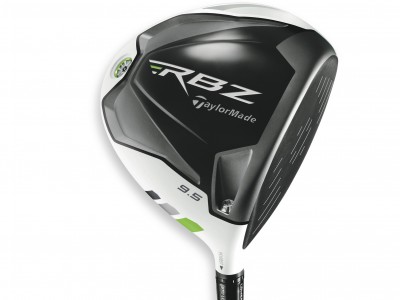
Nowadays, it seems as if golf equipment companies are assisting you even more in adopting this philosophy of ‘letting the club do the work’ i.e. by introducing drivers with a draw or fade bias, clubs which rectify the faults in your natural swing. Personally I do not agree with this approach, but if it improves the enjoyment of the game for many, who am I to say any different?
However, having stated the above, I am of the opinion that hitting the ball hard does have a place on the course, and it would seem that modern professional golf is starting to agree with me. Don’t get me wrong, when I refer to hitting the ball hard, I actually mean a ball should be correctly “stroked” very hard.
Anyone who has been watching professional golf over the past two years will have witnessed the rise to near perfection of Rory Mcllroy. You would also have noticed an increase his bulk mass and size and this was coupled with the return of one of the great golfers of our time, Tiger Woods. We now have front row seats as these two great golfers joust it out for the coveted number one spot in the world. This duel is similar to those we witnessed and enjoyed all those years ago between Jack Nicklaus and Tom Watson. It can’t be overlooked in all this, that Tiger has been seeing more of the inside of a gym too. While Tiger has always kept lean and fit there has, since his re-emergence, been a definite desire to increase mass and upper body strength.
So the question now becomes, why the interest in bicep curls and chest presses? Surely the need is not so great, especially if we look at Henrik Stenson who’s sweet striking of his 3 wood around the Gary Player Country Club in 2008 (which generally sent his ball farther than his competitors drivers), saw him to a commanding 21 under par score and dominant win in the Nedbank Golf Challenge. Henrik himself is not a weight crunching gym enthusiast. And yes, I do note the irony of speaking about a player who doesn’t train hard, winning a competition on a course designed by a player who, till this day, still claims that he can do a thousand sit-ups. But as Bob Dylan said ‘the times, they are a-changin’ and a sweetly struck ball, may not be enough any more. I refer in this aspect to the fact that courses are now currently being designed to be longer than 6,600M and that older Championship courses under this length are slowly being replaced because of the era of the new long hitters (EIGCA – European Institute of Golf Course Architects).
A counter argument which may always be raised is that new technology is designing clubs with greater ‘sweet spots’ and golf balls which just go farther, both of which have more to do with the distance the ball travels, as opposed to the strength of the person doing the hitting. This is a good point, but if we all have the ‘new gear’ with greater ‘sweet-spots’ and we all hitting the ball further, then the advantage lies with the player who can hit the ball ‘harder’.
In simple terms, a longer drive from a harder hit may create a situation which sees you playing an 8-iron into a green, whereas your opponent with a slightly shorter drive, is playing his approach with a 6-iron. I’m not ashamed to admit that at my current level of skill, I have more chance on landing a ball on a green, and having it stay on the green, with an 8-iron than I do with a 6-iron.
Turning to the Pro’s we ask, “does out-driving your competitor, who is capable of landing a ball on a green with any club, really make any difference?” Well, we can only speculate as to the answers we may receive, provided we have time to ask Rory or Tiger between their sets of push-up and pull-ups.
Another aspect to be considered in the harmonizing of Gym and Golf is that of endurance training. A golfer who hits the treadmill to build up his fitness will undoubtedly have more staying power and mental strength as a result of his increase in stamina when compared to a golfer who does not hit the treadmill. A fitter person, during the playing of a sport, will trounce an unfit opponent more times than not. If you don’t believe me, just ask the captain of the greatest rugby playing nation in the world, South Africa, when, before winning the 1995 Rugby World Cup, Francois Pienaar was quoted as saying “we may not be the best nation, but we will be the fittest”, and the proof is in the pudding.

- Running can build endurance

Professional golfers are all incredibly skilled and have vast resources of natural ability, and in a way it can be said that they all start on a level playing field when teeing up the ball. So in order to achieve an edge over your nearest rival, it might be necessary to sacrifice a couple of driving range sessions for some indoor weight training, with a bit of cardio mixed in. Ideally one would have to start looking at other sports such as cross-fit, which includes disciplines of cardio, endurance training, muscle gain and weight training all in one.
So, all this talk of ‘hitting the gym’, what does it mean for the modern golfer? Well an approach with a higher lofted club, or the mental strength when lining up over a tough putt on the 18th green could be the difference between first or second and a couple hundred thousand dollars, or, for you and me, the cost of a round of drinks in the clubhouse. Regrettably however, this does tend to cast a shadow over a personal favourite player of mine, Miguel Angel Jiménez who’s red wine at halfway and cigar down the fairway may have to be traded for a banana and powerade…not likely!
Richard ‘Mulligan’ Gaugeler